

Kratom & 7-OH Addiction: Causes, Risks, and How Suboxone Treatment Can Help
Kratom (Mitragyna speciosa) and its potent alkaloid 7-hydroxymitragynine (7-OH) are often promoted as natural mood enhancers or pain remedies—but these substances can quickly lead to dangerous dependency and withdrawal. This guide explores the addiction risks, emerging regulation, and how Suboxone (buprenorphine/naloxone) can play a vital role in safely managing withdrawal symptoms. Whether you’re struggling with Kratom dependence or looking for trusted telemedicine treatment in Tennessee, this page provides evidence-based insights and compassionate support.
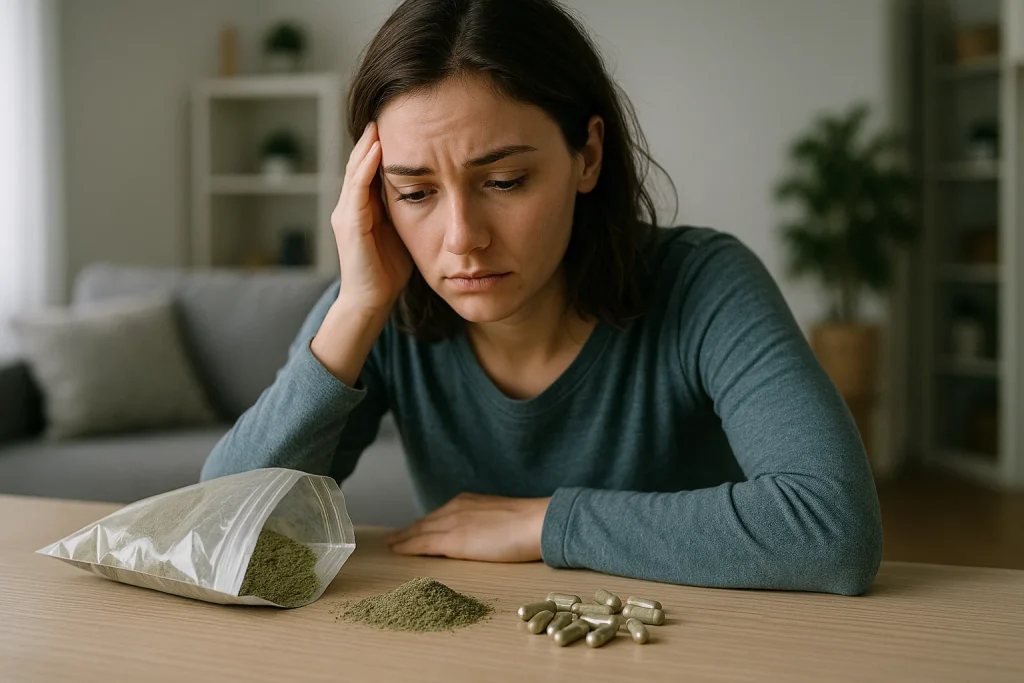
A Tennessee patient struggling with Kratom dependence seeks safe, virtual Suboxone treatment for withdrawal and cravings.
What Are Kratom, 7-OH, and 7-Hydroxy?
Kratom is a tropical tree from Southeast Asia. Its main alkaloids—mitragynine and 7-OH—interact with opioid receptors.
7-OH is especially powerful, up to 13x stronger than morphine in lab models.
At low doses, Kratom acts as a stimulant; at high doses, it mimics opioids with sedative and pain-relieving effects.
The Many Names of Kratom, 7-Hydroxy, 7-OH
Kratom and its potent alkaloid, 7-hydroxymitragynine (7-OH), go by many different names depending on culture, preparation, or even marketing. Recognizing these terms is important because patients may not realize they are taking the same addictive substance under a different label.
Common names for Kratom include:
- Kratom (most widely used)
- Hydro
- Thang
- Herbal speedball
- Biak
- Maeng Da
- Thom
- Ketum (Malaysia, Indonesia)
- Biak-biak
- Ithang
- Kakuam
- Herbal speedball (slang, often when mixed with other drugs)
- Mitragyna speciosa (scientific name)
- Mitragynine (primary alkaloid)
- Kratom leaf / tea / powder / capsules (marketing descriptions)
Common variants for 7-Hydroxy include:
- 7-OH
- 7-OH Mitragynine
- 7-hydroxy
- 7-hydroxymitragynine
- Hydroxy mitragynine
- Kratom extract alkaloid
- Potent Kratom derivative
By understanding all of the ways Kratom and 7-OH are described, patients and families can better recognize when they are facing the risks of dependence, even if the substance is being marketed as “natural” or “safe.”
Kratom’s Many Chemical Compounds
Kratom (Mitragyna speciosa) contains over 50 identified alkaloids, primarily mitragynine and 7-hydroxymitragynine, which account for most of its psychoactive effects. These compounds act as partial agonists at μ-opioid receptors while also interacting with adrenergic, serotonin, and dopamine pathways. Interaction with the μ-opioid receptors is why Suboxone has become the standard for treating Kratom/7-OH withdrawals and cravings.
Alkaloids including paynantheine, speciociliatine, speciogynine, mitraciliatine, and corynantheidine, contribute to Kratom/7-OH’s stimulant, sedative, muscle-relaxant, and analgesic effects, as well as its highly variable clinical effects and dependence potential.
The most common Kratom compounds are:
- Mitragynine: The most abundant active alkaloid, acting as a partial opioid agonist and interacting with various brain receptors.
- Paynantheine: Contributes to kratom’s overall effects.
- Corynantheidine: An alkaloid that can block opioid receptors.
- Speciogynine, Mitralactonal, Rhynchophylline, Raubasine, and Mitragynaline: Other identified alkaloids.
- 7-Hydroxymitragynine (7-HMG): A powerful, though less abundant, opioid agonist, often considered more potent than mitragynine.
- Speciociliatine: Another important alkaloid found in significant amounts.
- Mitraphylline: An alkaloid with potential anti-inflammatory properties.
Why Is Kratom So Addictive?
Acts on the same brain pathways as opioids → tolerance, cravings, and dependence.
Users often increase their dosage 4x–10x within weeks of their very first use.
Relapse rates after quitting are as high as 78–89% within three months.
Dependence risk is nearly 3x higher in people with prior substance use history.
How Do People Abuse Kratom and 7-OH?
Kratom and its alkaloid 7-hydroxymitragynine (7-OH) are most often misused through oral ingestion. Many people take Kratom in the form of capsules, tablets, or concentrated extracts. Others use powdered or dried Kratom leaves to brew tea, while in some regions, the fresh leaf is chewed. These methods may seem harmless, but each carries a risk of dependence and harmful health effects.
What Effects Does Kratom Have on the Body?
The effects of Kratom vary by dose, frequency, and individual physiology:
- Low doses: Increased alertness, boosted physical energy, and talkativeness.
- High doses: Sedation, drowsiness, and opioid-like effects.
- Addictive properties: Can lead to hallucinations, delusions, and confusion.
- Kratom/7-OH Side effects: Nausea, itching, sweating, dry mouth, constipation, frequent urination, and loss of appetite.
- Long-term risks: Chronic use may cause anorexia, significant weight loss, and persistent insomnia.
Understanding Kratom & 7-OH Withdrawal and Treatment in Tennessee
Common Withdrawal Symptoms
Kratom & 7-OH Withdrawal and Treatment in Tennessee often starts with recognizing the symptoms. Withdrawal can begin within hours after the last dose and may include:
- Severe anxiety or irritability
- Muscle aches and joint pain
- Insomnia
- Sweating and chills
- Nausea and vomiting
- Intense cravings
- Depression
For many, the fear of withdrawal is what keeps them stuck.
Why Withdrawal Feels So Intense
7-OH binds strongly to opioid receptors, which means your brain adapts to its presence. When you stop, your body reacts quickly—leading to uncomfortable symptoms that can feel overwhelming without medical support.
Why People in Tennessee Turn to Kratom
Many patients across Tennessee have similar stories about why they first used Kratom:
- Were told Kratom/7-OH is non-addictive
- Use Kratom for energy or as an alternative to Adderall
- Try Kratom for alertness (for work or studying)
- Use 7-OH/7-Hydroxy to relieve pain
- Use Kratom/7-Hydroxy to quit opioids
- Wanted to avoid stigma or clinic visits
- Were given a free sample from a Kratom/7-OH retailer
Over time, what started as relief becomes dependency.
The Problem with Quitting Cold Turkey
Kratom is currently gathering attention in Tennessee from lawmakers due its extreme addictive qualities, which could lead to Kratom, or Kratom products containing 7-Hydroxy being banned in Tennessee.
Tennessee Kratom Ban Bill HB1649/SB1655 explains the possibility of it being banned.
Many people have tried to quit taking Kratom/7-OH without help unsuccessfully, and relapsed due to it’s highly-addictive properties.
Here’s why:
- Kratom/7-OH withdrawal symptoms peak quickly
- Kratom/7-Hydroxy cravings become overwhelming
- Mental health symptoms intensify with Kratom/7-OH
- A lack of support while addicted to Kratom/7-Hydroxy leads to isolation
Without treatment, many return to kratom—or even stronger opioids.
The Most Effective Kratom & 7-OH Withdrawal and Treatment in Tennessee
Suboxone Treatment for Kratom Addiction: A Proven Solution
The most effective method for Kratom & 7-OH Withdrawal in Tennessee is Suboxone Treatment (buprenorphine/naloxone).
Potency of Kratom vs. Heroin
Kratom itself is generally less potent than heroin, but it contains alkaloids that act on the same μ-opioid receptors in the brain.
The main alkaloid, mitragynine, is relatively weak compared to heroin or morphine.
However, 7-hydroxymitragynine (7-OH) — another alkaloid in Kratom — is far more powerful than heroin.
Laboratory studies suggest Kratom/7-Hydroxy is up to 13 times more potent than morphine in animal models.
While typical Kratom tea or capsules don’t deliver the same rapid, overwhelming “high” as heroin, concentrated extracts or very high doses can produce opioid-like sedation, respiratory depression, and strong dependence risks.
Kratom products are unregulated. That means users don’t know the exact strength or contamination with other substances, which makes it even more dangerous.
Complete Kratom & 7-OH Resource Library: Symptoms, Treatment, and Recovery in Tennessee
If you’re trying to understand kratom or 7-hydroxy (7-OH), it can feel overwhelming—especially when you’re dealing with withdrawal, cravings, or uncertainty about what to do next. This resource library brings everything together in one place, so you don’t have to search endlessly for answers.
Below, you’ll find carefully organized guides covering withdrawal symptoms and timelines, how Suboxone can help, safe tapering strategies, risks and side effects, and proven treatment options available in Tennessee. You’ll also find updates on Tennessee laws that may impact access to kratom. Whether you’re researching or ready to take action, these resources are here to help you move forward.
Withdrawal & Symptoms
- Kratom Cold Turkey Is Dangerous — Here’s the Safer Option
- 7-Hydroxy Withdrawal: Safe, Virtual Recovery Options in Tennessee
- 7-Hydroxymitragynine Withdrawal: Safe Recovery Options in Tennessee
- Does Suboxone Help Kratom 7-OH Withdrawal?
- Kratom Dependence: A Growing Risk in Tennessee
- Kratom Withdrawal Home Remedies: Safe Relief & Virtual Treatment in Tennessee
- Kratom Withdrawal Success Stories: How Tennesseans Found Real Recovery
- Kratom Withdrawal Symptoms Day by Day: What to Expect and How to Recover
- Kratom Withdrawal Timeline – What to Expect and How to Find Relief
- Kratom Withdrawal Treatment: Safe, Effective Options in Tennessee
- Kratom Withdrawal: Safe Treatment Options in Tennessee
- Suboxone Treats 7-OH and Kratom Withdrawal: A Safer Path in Tennessee
Suboxone + Kratom
- Can You Take Suboxone After 7-OH? What Tennessee Patients Need to Know
- How Suboxone Treats Kratom Addiction: What Patients in Tennessee Should Know
- Kratom 7-OH Recovery: Virtual Suboxone Treatment in Tennessee
Tapering / Quitting
Risks / Side Effects
- Can You Get Addicted to Kratom? Understanding the Risks and Recovery Options in Tennessee
- Does 7-Hydroxy/Kratom Help With Energy and Clarity?
- Does 7-OH/Kratom Help With Pain?
- Kratom & 7-Hydroxy During Pregnancy: Hidden Dangers That Could Harm Your Baby
- Kratom Side Effects: What Tennessee Residents Need to Know
- Understanding 7-Hydroxy Addiction and How Telemedicine Can Help
- Understanding 7-Hydroxymitragynine Addiction in Tennessee
Treatment / Recovery
- Virtual Treatment for Kratom Addiction: Effective Online Help
- 7-OH Addiction: Virtual Recovery Options in Tennessee
- Help for Kratom Addiction in Tennessee: Safe, Virtual Treatment That Works
- How to Quit Kratom: A Tennessee Guide to Recovery
- Kratom Abuse: Safe Virtual Treatment in Tennessee
- Kratom Addiction Treatment in Tennessee: A Safe, Virtual Path to Recovery
- Kratom Addiction: Safe, Virtual Recovery Options in Tennessee
- Kratom Rehab Near Me: Safe, Effective & Virtual Addiction Treatment in Tennessee
- Kratom Use Disorder: Safe, Virtual Treatment in Tennessee
- Overcoming Kratom Addiction: Your Path to Lasting Recovery
Laws / Legislation
- Kratom Ban Tennessee 2026: What Users Need to Do Before July 1
- Kratom Ban Tennessee 2026: Criminal Penalties Explained
- Matthew Davenport’s Law: What Tennessee Kratom Users Need to Know
- 7-Hydroxy Kratom Products: Why Tennessee Lawmakers Are Concerned
- Is Kratom Becoming Illegal in Tennessee? Understanding HB1649
- New Tennessee Bill Targets Kratom and 7-Hydroxy Products: What Residents Need to Know
- Tennessee Kratom Ban Bill (HB1649 / SB1655): What It Means for Users in Tennessee
Health Risks & FDA Warnings
- The FDA has announced its intention to schedule Kratom as a controlled substance, stating:
On July 29, 2025, the FDA announced it is taking a bold step to protect Americans from dangerous, illegal opioids by recommending a scheduling action to control certain 7-hydroxymitragynine (also known as 7-OH ) products under the Controlled Substances Act. The FDA warns Kratom is not approved for any medical purpose.
- The DEA listed Kratom/7-Hydroxy as a “Drug of Concern” in January 2025.
Risks include liver damage, seizures, and substance use disorder.
Kratom products may contain dangerous contaminants.
When mixed with other drugs, Kratom has been linked to fatal overdoses.
Legal Status – Tennessee Has Officially Banned Kratom and 7-OH
- Tennessee has banned kratom and 7-hydroxymitragynine (7-OH) statewide. Governor Bill Lee signed Matthew Davenport’s Law (HB1649) into law in April 2026, making Tennessee one of the strictest states in the country on kratom.
- The ban takes effect July 1, 2026. After this date, possession of kratom or 7-OH will be a Class A misdemeanor, and manufacturing, selling, or distributing these substances will be a Class C felony. Sales to minors carry even harsher Class B felony penalties. See the full breakdown of criminal penalties.
- The law covers all forms of kratom, including natural leaf, powder, capsules, extracts, and concentrated 7-OH products — closing the loophole that previously allowed over-the-counter sales in Tennessee gas stations, smoke shops, and vape stores.
- Tennessee joins a growing list of states restricting or banning kratom, including Alabama, Arkansas, Indiana, Rhode Island, Vermont, and Wisconsin. Other states like Iowa, Illinois, and Massachusetts have passed or are considering similar legislation.
- 7-OH remains under federal FDA and DEA review. On July 29, 2025, the FDA formally recommended scheduling 7-hydroxymitragynine products as controlled substances under the Controlled Substances Act, citing their opioid-like potency and abuse potential.
- What this means for current users: If you or a loved one is currently dependent on kratom or 7-OH, the July 1, 2026 deadline makes it critical to seek treatment now. Stopping suddenly can trigger severe withdrawal — but medically supervised Suboxone treatment offers a safe, proven path to recovery before the ban takes effect.
Are Kratom Retailers Using Free Samples to Create Dependency?
There are increasing reports across Tennessee that some Kratom retailers may be offering free samples of high-potency Kratom extracts, including 7-hydroxymitragynine (often marketed as “7-OH” or “7-Hydroxy”), to customers.
While this may appear harmless on the surface, it raises serious concerns. 7-Hydroxy is significantly more potent than traditional Kratom leaf and has opioid-like effects that can quickly lead to tolerance, dependence, and withdrawal symptoms.
Offering free samples of a highly addictive substance follows a familiar pattern seen in other industries:
- Introduce the product at no cost
- Create a positive first experience
- Rely on the brain’s reward system to drive repeat purchases
Many individuals who experiment casually with these products report escalating use within weeks. What begins as curiosity can rapidly become daily reliance.
“I asked my friends who were taking it, is Kratom addictive? But, no one really knew for sure. They just knew they wanted to keep using more and more.”
If you or someone you love has started using Kratom or 7-Hydroxy and is noticing withdrawal, cravings, or loss of control, medical support is available and recovery is possible.
How Suboxone Helps With Kratom & 7-OH Withdrawal
Buprenorphine/naloxone (Suboxone) is one of the most effective ways to reduce Kratom withdrawal.
It eases cravings, stabilizes mood, and prevents relapse.
Case studies show Suboxone helps patients transition away from heavy Kratom use.
While not FDA-approved for Kratom specifically, Suboxone is widely recognized as the best available treatment option.
- Some people claim they’ve tapered off of Kratom, but tapering off Kratom without support is difficult at best.
“The number of new patient intakes associated with Kratom/7-OH addiction quadrupled from May to August 2025.”
— Drew Bourke – Co-Owner/President of Recovery Care of Columbia
Is Kratom a Safe Alternative to Pain Pills and Other Opioids?
Some people turn to Kratom as a so-called “natural” alternative to prescription opioids, hoping it will relieve pain or ease withdrawal. But the reality is that Kratom and its main alkaloid, 7-hydroxymitragynine (7-OH), act on the same opioid receptors in the brain as drugs like oxycodone or hydrocodone. This means Kratom carries many of the same risks of dependence, withdrawal, and addiction—without the medical supervision, dosing standards, or safety monitoring that prescription medications provide.
The FDA has not approved Kratom for any medical use, and major health organizations warn it can cause serious side effects, including seizures, liver damage, and even death when combined with other substances. Kratom is not a safe substitute for prescription pain medicine or opioid use disorder treatment. Instead, evidence-based approaches like Suboxone and medication-assisted treatment (MAT) provide a safer, more effective path to recovery.
“Kratom and its main alkaloid, 7-hydroxymitragynine (7-OH), act on the same opioid receptors in the brain as drugs like oxycodone or hydrocodone. This alarming rise underscores how quickly Kratom addiction is spreading across Tennessee.
Luckily, Kratom addiction treatment is now available.”
— Drew Bourke – Co-Owner/President at Recovery Care of Columbia
Why This Page Is Your Best Kratom Resource
Evidence-based – all data cited from peer-reviewed studies, FDA, and Mayo Clinic. (See “Kratom for opioid withdrawal: Does it work?“)
Comprehensive – covers addiction, risks, legal changes, and treatment.
Compassionate – focused on patient support, not fear tactics.
Local relevance – explains how Tennesseans can access same-day telemedicine Suboxone treatment.
Take the Next Step Toward Recovery
If you’re struggling with Kratom or 7-OH dependence, you don’t have to go through it alone. Our clinics offer:
Same-day Suboxone appointments via telemedicine
Discreet, virtual care from licensed providers
Affordable treatment covered by TennCare, private insurance, or self-pay
Register for Kratom Addiction Telemedicine Treatment in Tennessee
- Register with TennCare Medicaid
- Register with commercial insurance
- Register as a self-pay patient
- Register as a returning patient
We’re proud to be Tennessee’s preferred telemedicine Suboxone doctors.
Other Articles About Kratom/7-OH/7-Hydroxy Addiction

Suboxone Doctors in Madison County, TN
A Suboxone clinic serving Madison County, TN, and surrounding areas with telemedicine addiction treatment. Accepting TennCare Medicaid and most insurance plans. Payment plans for uninsured patients. A sliding-scale program is available.

Addiction Clinic Washington County, TN
A Suboxone doctor in Washington County, TN, providing virtual addiction treatment and overnight Suboxone delivery to all of Tennessee. Accepts TennCare Medicaid, commercial insurances, self-pay options, and a sliding-scale program. Evening appointments every Monday and Wednesday.

Dickson County, TN Suboxone Recovery
Dickson County, Tennessee's online addiction doctor serving all of Tennessee with virtual, accredited, insurance-based Suboxone treatment. Recipient of Tennessee's first virtual OBOT state medical license. Open till 9:00 PM every Monday and Wednesday.

Bedford County, TN Virtual Suboxone Program
Bedford County, TN, virtual Suboxone clinic accepts Medicaid and most commercial insurance. Telemedicine addiction treatment to all of Tennessee with medication delivery options and evening appointments every Monday and Wednesday.