

Columbia Suboxone Clinic Blog
Matthew Davenport’s Law: What Tennessee Kratom Users Need to Know
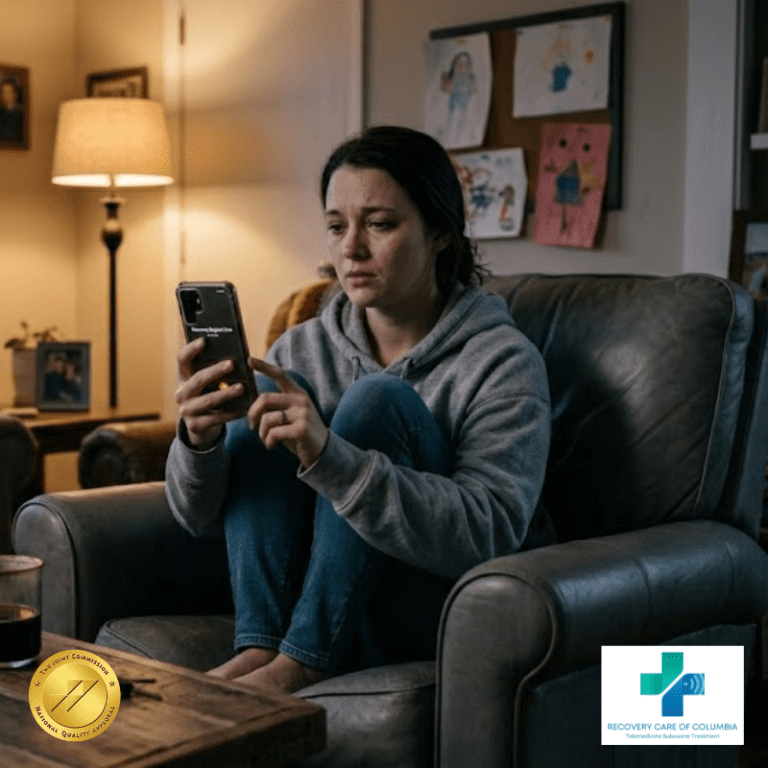
Matthew Davenport’s Law is about to change everything for kratom users across Tennessee — and if you use kratom daily, the window to act safely is closing fast.
If you picked up kratom at a gas station, vape shop, or smoke shop thinking it was a safe, legal supplement, you were not alone. Thousands of people across Tennessee made the same assumption. But Matthew Davenport, a kind and thoughtful young man who had found support in rehab and a sober-living home where he had been thriving, purchased kratom as easily as breath mints at a convenience store — and it cost him his life. His death became the catalyst for one of the most significant pieces of drug legislation in Tennessee history. Here is everything you need to know about Matthew Davenport’s Law — and what you should do right now if you’re dependent on kratom.
Kratom Ban Tennessee 2026: Criminal Penalties Explained
Start Online Addiction Treatment for Kratom/7-Hydroxy Today—No Clinic Visits Required
- TennCare accepted — If you have TennCare (Tennessee Medicaid), your Suboxone treatment may be covered at little to no cost to you.
- Commercial insurance accepted — Most major commercial insurance plans cover medication-assisted treatment (MAT) for opioid addiction.
- Self-Pay payment plans — For patients with moderate to high income, with or without health insurance.
- Low-Cost Sliding Scale options — For patients who are uninsured or underinsured, Recovery Care offers income-based pricing so cost is never a barrier to getting help.
- No surprise bills — Our team walks you through your coverage before you begin so you know exactly what to expect.
- Returning patient? — Restart your treatment by filling-in a short reinstatement form.
Call or text us now at (931) 548-3062 to speak to someone about our telemedicine Suboxone program. Or, message us securely on the Spruce Health mobile app. We’re ready to help.
The Story Behind Matthew Davenport’s Law
Matthew Davenport died on March 18, 2024. His mother, Karen Davenport, described what happened simply: “It’s touted as a natural supplement. He took it, and he did not wake up.”
Karen, who had worked in the medical profession for over 30 years as a nurse and nurse practitioner, had no idea what kratom was until the call came. “It was devastating,” she said. “I did not want anyone else and their family members to go through what we suffered through.”
Matthew believed the substance was safe because it was easy to buy. “My son didn’t know what he was doing. He didn’t know what he was taking, and he assumed because he bought it at a gas station that it was safe,” Karen told lawmakers.
“Probably the single most dangerous drug available to the public right now without a prescription.”
Rep. Tim Rudd (R-Murfreesboro)
Karen’s grief became action. She shared Matthew’s story with State Rep. Esther Helton-Haynes, who drafted the legislation now bearing her son’s name. Karen told members of the Tennessee House Criminal Justice Subcommittee: “I’ve poured countless hours into researching this substance and believe wholeheartedly that no family should have to endure the torment that’s gripped mine.”
Her mission is clear: “I can’t bring my Matthew back, but maybe I can make a difference in somebody else’s life — keep it from happening to the next person.”
Tennessee’s Accredited Kratom Addiction Treatment Provider
Recovery Care of Columbia delivers evidence-based Suboxone treatment through secure telemedicine, staffed by licensed Tennessee clinicians. No clinic visits required.
- Serving all communities across Tennessee
- Accredited by The Joint Commission
- Owned and operated by people in long-term recovery who live in Tennessee
Register for telemedicine Suboxone treatment using your TennCare Medicaid, commercial insurance, or choose a payment plan. (A sliding-scale program is also available) Click here if you’re a returning patient.
What Is Matthew Davenport’s Law?
House Bill 1649, known as Matthew Davenport’s Law and sponsored by Rep. Esther Helton-Haynes (R–East Brainerd), creates new criminal penalties and strengthens enforcement aimed at curbing access to kratom. The bill is named for Chattanooga resident Matthew Davenport, who died at age 27 in 2024 after a lethal interaction between kratom and prescribed medications.
The bill previously passed the Tennessee House in a 78-9 vote. With Senate approval now secured, the measure heads to the governor’s desk for final consideration. If signed by Gov. Lee, the bill will go into effect on July 1, 2026.
Matthew Davenport’s Law applies statewide — to everyone in Nashville, Knoxville, Chattanooga, Johnson City, and Germantown, and to every rural county in between. There are no exemptions for personal use, medical necessity, or prior legal purchases.
What Does Matthew Davenport’s Law Actually Do?
The legislation accomplishes four major things:
- Criminalizes possession, sale, manufacture, and distribution of kratom in all forms — including 7-OH and 7-Hydroxy extracts
- Establishes tiered criminal penalties ranging from misdemeanor to felony depending on the offense
- Requires county medical examiners to test for kratom during autopsies whenever a drug overdose is suspected, and requires treating physicians to include kratom in toxicology screens ordered for suspected overdoses or neonatal abstinence syndrome
- Requires the Tennessee Department of Labor and Workforce Development to add kratom to its official definition of a “drug”
Is Kratom an Opioid? What Tennessee Patients Need to Know
Matthew Davenport’s Law: Criminal Penalties for Kratom in Tennessee
This is the section that matters most if you’re a daily kratom user in Tennessee. These are not proposed fines — these are criminal charges with real consequences for your freedom, your family, and your future.
Kratom Possession: Class A Misdemeanor
- Up to 11 months and 29 days in jail
- Fines up to $2,500
- Applies to any form of kratom: powder, capsules, liquid shots, and 7-OH extracts
Selling or Manufacturing Kratom: Class C Felony
- 3 to 15 years in prison
- Fines up to $10,000
- Applies to retailers, distributors, and anyone passing kratom to another person
Selling Kratom to a Minor: Class B Felony
- 8 to 30 years in prison
- Fines up to $25,000
- Applies when an adult at least two years older than the minor knowingly sold or delivered kratom to them
If you have a prior record — even something unrelated — a kratom charge on top of it could affect your probation, parole, child custody, housing, or employment. The risk of waiting is not worth it.
Why Kratom Is More Dangerous Than Most People Realize
Many Tennesseans used kratom for years assuming it was safe — because gas stations sold it like an energy supplement. That assumption, as Matthew Davenport’s family tragically discovered, can be fatal.
Tennessee Bureau of Investigation (TBI) investigators told lawmakers that kratom overdoses may be less responsive to Naloxone (Narcan) — the life-saving medication used to reverse opioid overdoses. That means if a kratom overdose occurs, even paramedics may struggle to reverse it.
Ryan Scafe, Director of Client Relations at Renew Ministries and a recovering addict himself, noted the rising number of people struggling with kratom dependency, saying: “Since there is no regulation, it’s like the wild wild west, and it’s only getting more potent and more potent.” He described a case where a man found kratom withdrawals worse than those from fentanyl and heroin.
Rep. Tim Rudd (R-Murfreesboro) called Kratom “probably the single most dangerous drug available to the public right now without a prescription.”
Addiction Treatment Reimagined for Tennessee
- Joint Commission Accredited
- Clinic owners in long-term recovery
- Over 125 five-star patient reviews on Google
- Tennessee’s first Virtual OBOT medical license
- Clinics treated over 1000 patients in 2025
- 2025 regional award winner for “Best Substance Abuse Facility” by Best of Tennessee
- TennCare Medicaid and all major health insurance accepted
- Overnight Suboxone delivery available in most areas (a delivery fee applies)
- A compassionate team of caring doctors, nurse practitioners, counselors, and administrators who genuinely care about your recovery.
- No clinic visits: 100% virtual addiction treatment anywhere in Tennessee
- Same-day appointments Monday through Friday, 8:00 AM to 5:00 PM (CST) based on availability
- Evening appointments available Mondays and Wednesdays until 9:00 PM
- Compassionate, stigma-free, judgement-free care
- No referral needed
Our kind staff is happy to answer any questions you may have. Call us or send us a text at (931) 548-3062, or message us securely using the Spruce Health mobile app.
Worried about starting online addiction treatment? Learn what to expect during your first Suboxone telemedicine appointment.
Why 7-OH Is Especially Dangerous
The concentrated 7-OH (7-Hydroxymitragynine) shots and liquid extracts available at smoke shops across Tennessee are explicitly covered under Matthew Davenport’s Law. These products deliver a far more potent dose of the active compound than standard kratom powder and carry significantly greater overdose risk. According to the U.S. Drug Enforcement Administration, kratom is classified as a drug of concern and carries risks of seizures, hallucinations, and liver toxicity.
If Kratom Becomes Illegal, What Happens to Your Body?
Here is the reality that most news coverage skips over: for daily kratom users, the July 1 deadline is not just a legal problem. It is a medical crisis waiting to happen.
Kratom acts on the exact same opioid receptors in the brain as heroin, fentanyl, oxycodone, OxyContin, and Percocet. That means daily users develop a genuine physical dependence, and stopping abruptly — whether because the law kicks in or because supply disappears — triggers real opioid withdrawal:
- Severe muscle and joint pain that makes it hard to stand
- Uncontrollable nausea, vomiting, and diarrhea
- Sweating, chills, and hot flashes
- Insomnia and restless legs that won’t stop
- Crushing anxiety, depression, and irritability
- Cravings so powerful that relapse becomes almost automatic
This is your brain’s chemistry — not a weakness, not a character flaw. And it is completely treatable with the right medical care.
Kratom Withdrawal Symptoms and How Suboxone Helps
The Safer, Legal Alternative: Virtual Suboxone Treatment
Suboxone (buprenorphine/naloxone) works on the same opioid receptors as kratom, which means it is medically capable of virtually eliminating the withdrawal symptoms and cravings that make stopping so terrifying. It is FDA-approved, legally prescribed, covered by most insurance plans — and it works.
The transition from kratom to Suboxone, under medical supervision, typically looks like this:
- Your last dose of kratom
- Wait approximately 12–24 hours as mild withdrawal begins
- First dose of Suboxone — most patients feel dramatically better within hours
- Regular virtual check-ins to adjust dosage and monitor progress
- Gradual, medically guided taper over time as your brain heals
You do not have to tough this out alone. You do not have to go cold turkey. And you absolutely do not have to wait until July 1 to get help.
Recovery Care of Columbia: Tennessee’s Only Fully Virtual Addiction Treatment Provider
Recovery Care of Columbia is Tennessee’s first and only addiction treatment provider licensed to deliver fully virtual care. Every single appointment happens through your phone or tablet — no clinic visits, no waiting rooms, and no one in your town will see you walking into a treatment center.
For people across rural Tennessee — where the nearest addiction treatment clinic might be 45 minutes away and reliable transportation isn’t guaranteed — this is not just convenient. It is the difference between getting help and not getting help at all.
Here’s how to start:
- Call or request an appointment online — all you need is your phone
- Complete a brief virtual intake — same-day or next-day in most cases
- Meet with a licensed provider by video — they’ll review your kratom use history and build your treatment plan
- Receive your Suboxone prescription — sent to a pharmacy near you, or delivered directly to your front door (a small delivery fee applies)
- Continue virtual care from home — private, consistent, and on your schedule
We accept TennCare and most commercial insurance plans, and we offer affordable self-pay options. A prior criminal record will never disqualify you from receiving care.
How to Get Started With Virtual Suboxone Treatment in Tennessee
FAQ: Matthew Davenport’s Law and What Kratom Users Should Do
Q1: What exactly is Matthew Davenport’s Law in Tennessee? Matthew Davenport’s Law is House Bill 1649, passed by both the Tennessee House (78-9) and Senate (23-3) and currently awaiting Governor Bill Lee’s signature. It bans the possession, sale, manufacture, and distribution of all forms of kratom — including 7-OH and 7-Hydroxy products — and establishes criminal penalties ranging from a Class A misdemeanor for possession to Class B and C felonies for selling or distributing. If signed, it takes effect July 1, 2026.
Q2: Who was Matthew Davenport and why is this law named after him? Matthew Davenport was a 27-year-old man from Chattanooga, Tennessee, who died on March 18, 2024, after kratom interacted lethally with his prescription medications. He had been doing well in recovery — living in a sober home and rebuilding his life — when he purchased kratom at a convenience store, not knowing it was dangerous. His mother, Karen Davenport, a nurse practitioner with over 30 years of experience, became a leading advocate for the ban after his death and worked directly with lawmakers to draft the legislation.
Q3: When does Matthew Davenport’s Law take effect? If Governor Bill Lee signs the bill — which is widely expected, as he included funding for the legislation in his proposed state budget — Matthew Davenport’s Law takes effect on July 1, 2026. After that date, any form of kratom possession in Tennessee is a criminal offense.
Q4: Does the law cover 7-OH and 7-Hydroxy kratom products? Yes. The legislation covers all forms of kratom and its derivatives, including 7-OH (7-Hydroxymitragynine) shots and liquid extracts. These concentrated products are explicitly targeted in the bill and carry the same criminal exposure as standard kratom powder or capsules.
Q5: I’ve been using kratom to manage pain and avoid opioid withdrawal. What do I do now? You have a safe, legal, medically proven option available right now. Suboxone (buprenorphine) works on the same opioid receptors as kratom and virtually eliminates withdrawal symptoms and cravings. Recovery Care of Columbia can connect you with a licensed provider virtually — typically within 24–48 hours — and your prescription can be delivered to your door. You don’t have to suffer through withdrawal, and you don’t have to risk criminal charges by continuing to use kratom after July 1.
Q6: Can Suboxone really help with kratom dependence? Yes. Because kratom activates the same mu-opioid receptors as prescription opioids, buprenorphine-based treatment is clinically effective for kratom dependence. Many patients are surprised at how quickly they feel normal again after starting Suboxone under medical supervision. Our providers at Recovery Care of Columbia have specific experience managing the transition from kratom and can guide you through every step.
Q7: Does TennCare cover Suboxone treatment through Recovery Care of Columbia? In most cases, yes. TennCare covers medication-assisted treatment for opioid use disorder, including buprenorphine (Suboxone). Our intake team verifies your specific insurance coverage during your initial call at no cost to you. Most commercial insurance plans also cover treatment. Affordable self-pay options are available for patients without insurance.
Q8: I have a prior felony. Will that prevent me from getting addiction treatment? No. A prior criminal record — including drug-related felonies — does not disqualify you from receiving care at Recovery Care of Columbia. We have helped patients with complicated legal histories get the treatment they need, without judgment. Your privacy is protected under HIPAA, and our only goal is to help you move forward.
Q9: What if I’ve been using kratom alongside fentanyl, heroin, or other opioids? We treat poly-substance opioid dependence regularly. Whether you’ve been combining kratom with fentanyl, heroin, oxycodone, OxyContin, Percocet, or 7-Hydroxy products, our licensed providers are experienced in building a safe, individualized treatment plan for your specific situation. The more honest you are with us during your intake, the better we can care for you.
Q10: I’m not sure I’m ready for treatment. Can I just find out more first? Absolutely. You can call us, browse our website, or submit a request online with zero pressure and zero commitment. You don’t have to have everything figured out before you reach out. Many of our patients made their first call when they weren’t sure they were ready — and they’ll tell you it was the most important call of their lives, for themselves and for their families.
Matthew Davenport’s Story Deserves More Than a Law. It Deserves Action.
Matthew Davenport didn’t know what he was taking. He didn’t know kratom could kill him. He assumed that because something was sold at a gas station, it had to be safe. And it cost him everything.
Matthew Davenport’s Law exists because of him — but it also exists for you. Not just as a criminal penalty, but as a signal: the time to get off kratom is now, while you can do it safely, medically, and with full legal protection.
Recovery Care of Columbia is Tennessee’s first fully licensed virtual addiction treatment provider. Private. Compassionate. Accessible from anywhere in the state. No clinic visits. No waiting rooms. Just real medical care from your phone — for you, and for everyone who needs you to be okay.
Call us today or request a virtual appointment online. July 1 is coming. Your recovery can start right now.
Fast Online Registration—Treatment Delivered to Your Door
Thanks to our unique virtual medical license, anyone living in East Tennessee, Middle Tennessee, or West Tennessee can safely and legally access online Suboxone treatment using any smartphone, tablet, or computer, without ever having to visit a clinic.
You can review insurance and pricing details before scheduling, so there are no surprises.
Call or text now: (931) 548-3062. Our friendly staff is happy to explain how our virtual “No Clinics, No Pharmacies” program works. Or, you can send a secure message using the Spruce Health mobile app. We’re ready to help when you’re ready to quit.
If you have TennCare Medicaid insurance, your treatment and medication costs are typically $0. If you have commercial health insurance, we will provide you with a treatment cost estimate before scheduling your first telemedicine appointment. If you don’t have health insurance, we offer biweekly and monthly payment plans.
Read More Addiction-Related Articles
- How to Transition from Kratom to Suboxone in Tennessee
- Kratom Withdrawal: Safe Treatment Options in Tennessee
- Kratom Withdrawal Treatment: Safe, Effective Options in Tennessee
- Virtual Treatment for Kratom Addiction: Effective Online Help
Explore More Kratom/7-OH & Recovery Resources
- Ready to stop kratom safely? Learn exactly how to transition from kratom to Suboxone in Tennessee
- National Institute on Drug Abuse
- Low-Cost Suboxone Treatment Using Sliding Scale
- DEA.gov – Opioid Addiction Resources
- National Center on Substance Abuse and Child Welfare
- SAMHSA – Substance Abuse and Mental Health Services Administration
- Struggling with kratom withdrawal? Read our full Kratom Withdrawal & Treatment Guide in Tennessee