

Columbia Suboxone Clinic Blog
Cat’s Claw Tablets: Hidden Opioids and Tennessee Safety Warnings
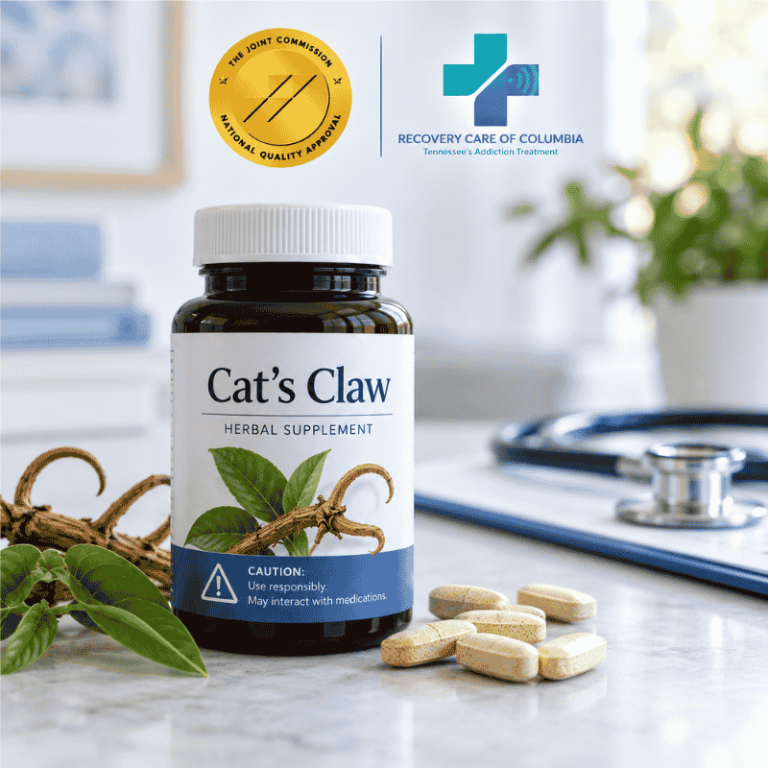
A product labeled “Cat’s Claw” may not always contain what its name suggests.
Traditional cat’s claw comes from plants such as Uncaria tomentosa and Uncaria guianensis. But in 2026, public health officials warned about some retail Cat’s Claw tablets sold in smoke shops and similar outlets after investigators found—or suspected—potent kratom-related opioid compounds that the labels did not clearly disclose.
That distinction matters for Tennessee residents, especially people who previously used kratom or concentrated 7-OH products and later encountered something marketed as Cat’s Claw.
Utah officials tested Buzzers-brand Cat’s Claw tablets and confirmed MGM-15 and mitragynine pseudoindoxyl in the products they tested. Those findings do not mean every product called Cat’s Claw contains those substances. Laboratory results from one tested product or batch also cannot establish what an individual tablet from another product contains.
For someone who has developed dependence, experiences withdrawal between doses, or struggles to stop using one of these products, uncertainty about the actual ingredients can make medical evaluation especially important.
Traditional Cat’s Claw Herb Is Not the Same as These Retail Products
Traditional cat’s claw is a Central and South American vine commonly known as Uncaria tomentosa, Uncaria guianensis, or uña de gato. It is not kratom, and evidence does not support automatically describing the traditional herb as an opioid or addictive substance.
The National Center for Complementary and Integrative Health says researchers have not established conclusive human evidence that traditional cat’s claw effectively treats any health condition. The herb may also interact with some medications and may pose concerns for people with certain medical conditions.
The newer safety concern involves a different category of product: tablets, chewables, extracts, or blends sold under Cat’s Claw labeling that may contain substances unrelated to traditional cat’s claw.
Botanical language on a package does not prove what the product actually contains.
Why Some Cat’s Claw Tablets Have Raised Opioid Safety Concerns
On July 22, 2026, the Utah Poison Control Center warned consumers about Cat’s Claw and kava products sold through smoke shops or online after receiving reports involving severe overdose, dependence, and withdrawal.
The initial alert named products including Buzzers and Homiez. Officials said they suspected adulteration with kratom-derived substances such as 7-hydroxymitragynine, mitragynine pseudoindoxyl, MGM-15, or MGM-16.
Importantly, officials described several compounds as suspected ingredients while testing continued. The initial warning did not confirm that every named substance appeared in every product or brand.
On July 30, Utah officials published more specific laboratory findings involving Buzzers Cat’s Claw tablets.
The Utah Department of Agriculture and Food reported that testing found:
- MGM-15, also called dihydro-7-hydroxymitragynine
- Mitragynine pseudoindoxyl, another kratom-related opioid compound
Officials found both substances in tested Buzzers products across multiple flavors. The warning also described several severe health incidents and a recent death that remained under investigation.
These laboratory results apply to the products officials tested. They do not prove that every Buzzers batch—or every product marketed as Cat’s Claw—contains the same ingredients.
What Are MGM-15 and Mitragynine Pseudoindoxyl?
MGM-15 and mitragynine pseudoindoxyl are chemically distinct compounds associated with the broader family of kratom-derived or kratom-related opioids.
MGM-15 is also known as dihydro-7-hydroxymitragynine. Laboratory research shows that purified MGM-15 interacts strongly with opioid receptors.
A 2025 analytical study reported greater binding affinity at human mu- and delta-opioid receptors than 7-OH under laboratory conditions. That finding supports concerns about opioid effects, but it does not provide a reliable human dose comparison, overdose threshold, or potency conversion for a retail tablet.
Laboratory receptor data also do not justify claims that MGM-15 is a specific number of times “stronger” in people.
Mitragynine pseudoindoxyl
Mitragynine pseudoindoxyl—sometimes shortened to pseudoindoxyl, MGPI, or MP—is a separate kratom-related opioid compound. MGM-15 and mitragynine pseudoindoxyl are not two names for the same substance.
A published 2026 case report described severe withdrawal in one person who progressed from powdered kratom to 7-OH and then mitragynine pseudoindoxyl.
The case provides clinically relevant information, but one patient cannot establish a universal withdrawal timeline for Cat’s Claw products, MGM-15, or pseudoindoxyl. The patient had also previously used substantial amounts of 7-OH, which makes it difficult to isolate pseudoindoxyl’s effects.
Cat’s Claw Product Names: What Has Actually Been Confirmed?
Packaging and brand names can help someone identify what they used, but they cannot substitute for laboratory testing.
| Product or name | What the evidence supports | Important limitation |
|---|---|---|
| Buzzers | Utah officials found MGM-15 and mitragynine pseudoindoxyl in tested Cat’s Claw tablets across multiple flavors. | Results from tested products do not prove that every batch contains the same compounds. |
| Homiez | Utah Poison Control named Homiez in its July warning about potentially adulterated Cat’s Claw/kava products. | The initial warning discussed suspected ingredients and ongoing testing rather than complete brand-by-compound laboratory results. |
| KLAZ / Klaz | A Tennessee prevention coalition reported seeing products with Cat’s Claw labeling on local shelves. | The coalition reportedly did not test the local products, so shelf presence does not establish a particular opioid ingredient. |
| Ice Tabz / ice tabz | Commercial listings have used cat’s claw botanical wording, while other listings used 7-OH-related marketing. | The research reviewed for this article found no agency laboratory result confirming MGM-15 or pseudoindoxyl in this brand. |
| Oxonol | A commercial seller associated this product name with MGM-15. | Marketing claims do not independently confirm the contents of every product carrying the name. |
The available evidence does not support saying that Buzzers, Homiez, KLAZ, and Ice Tabz all tested positive for the same compounds. The evidence for each product differs.
Packaging details such as flavor, colorful tablets, botanical Latin names, QR codes, or a certificate of analysis may provide useful clues, but none independently proves what a particular tablet contains.
Can a Product Say “No Kratom” or “No 7-OH” and Still Contain an Opioid?
Potentially, yes.
Utah Poison Control warned that some products might claim not to contain kratom or 7-OH even though officials suspected other kratom-derived opioid compounds.
This helps explain why the phrase cat’s claw drug can cause confusion. “Cat’s claw” may refer to the traditional herb, or the name may appear on retail packaging for a product with very different chemical contents.
A “kratom-free” label alone cannot establish that a product contains no opioid-active compounds.
Cat’s Claw Safety Warnings and the Tennessee Context
The timing of these products has particular relevance in Tennessee.
July 1, 2026: Tennessee’s kratom law took effect
Tennessee enacted HB 1649, known as Matthew Davenport’s Law, as Public Chapter 950. The law took effect July 1, 2026.
RCC has a separate guide explaining Matthew Davenport’s Law and Tennessee’s kratom restrictions.
Readers can also review the official Tennessee General Assembly record for HB 1649.
Because legal definitions can become technical and individual circumstances vary, this article does not provide personal legal advice.
July 22–30, 2026: Utah officials issue warnings
Utah Poison Control issued its initial alert on July 22. Later that month, state agriculture officials confirmed MGM-15 and mitragynine pseudoindoxyl in tested Buzzers Cat’s Claw tablets.
August 26, 2026: federal Schedule I action
The federal government temporarily placed MGM-15, mitragynine pseudoindoxyl, and MGM-16 into Schedule I.
The U.S. Department of Justice emergency scheduling announcement explains that the federal action targets those three compounds. It does not place the traditional cat’s claw plant itself into Schedule I.
Reports have also described products labeled Cat’s Claw appearing on Tennessee shelves after the state’s kratom restrictions took effect. Because investigators did not laboratory-test the local Tennessee products described in those reports, their presence represents a local observation rather than proof of composition.
Why Hidden Opioid Ingredients Can Be Dangerous
An unidentified opioid-active substance creates several risks.
First, the person may not know which compound they are taking.
Second, the label may not reliably disclose how much active substance the product contains.
Third, different compounds can behave differently in the body.
Fourth, combining an opioid-active product with alcohol, sedatives, benzodiazepines, prescription opioids, or other substances that slow breathing may increase danger.
Utah Poison Control reported severe overdoses, dependence, and withdrawal among the cases it investigated.
Someone who believes they bought a botanical supplement could therefore consume an opioid without realizing it.
Dependence and Difficulty Stopping Cat’s Claw Products
Physical dependence can develop when the body adapts to repeated exposure to an opioid-active substance.
Someone may notice that they:
- need the product regularly to feel normal,
- feel ill or intensely uncomfortable when they delay a dose,
- wake during the night and feel they need another dose,
- have tried unsuccessfully to stop,
- experience strong cravings,
- or continue using despite unwanted effects.
These symptoms deserve medical attention, but they cannot tell a clinician exactly which chemical caused them.
That distinction matters particularly for people who transitioned from kratom or 7-OH to a product labeled Cat’s Claw. Symptoms could reflect the newer product, previous exposure, multiple compounds, or a combination of factors.
For comparison, RCC explains better-established symptoms and timing associated with 7-OH and kratom withdrawal in its dedicated withdrawal timeline. Clinicians and patients should not automatically apply those timelines to an unidentified Cat’s Claw product.
How Long Do Cat’s Claw Tablets Last?
There is no reliable universal answer.
Current research does not establish a validated human half-life for an unidentified Cat’s Claw retail product or a standard duration of effect or withdrawal timeline for MGM-15.
The amount of time someone feels an effect also does not necessarily equal the drug’s elimination half-life.
Duration may vary based on:
- the actual active ingredient,
- the amount present,
- repeated dosing,
- multiple ingredients in one product,
- individual metabolism,
- previous opioid or 7-OH exposure,
- and inaccurate labeling.
Without knowing what a person’s exact product contains, giving a precise number of hours or days would create false certainty.
For the same reason, RCC does not recommend applying a universal Cat’s Claw detox timeline or fixed waiting period before starting medication for opioid use disorder.
Can Cat’s Claw Withdrawal Be Worse Than 7-OH Withdrawal?
Current human evidence cannot support that conclusion for everyone.
Some people may describe severe or prolonged symptoms after switching between kratom-derived products, but individual experiences do not prove that every Cat’s Claw product lasts longer or causes more severe withdrawal than 7-OH.
A 2026 case report involving mitragynine pseudoindoxyl documented significant withdrawal symptoms, including sweating, tremor, gastrointestinal symptoms, and severe restlessness. However, the patient had previously used substantial amounts of 7-OH, which makes it difficult to isolate pseudoindoxyl’s effects.
People dealing specifically with established kratom or 7-OH dependence can also read about kratom withdrawal treatment in Tennessee.
Cat’s Claw Overdose Warning Signs
An opioid overdose is a medical emergency.
Possible warning signs include:
- inability to wake the person,
- very slow or shallow breathing,
- stopped breathing,
- choking, gurgling, or unusual snoring while the person cannot wake up,
- limpness,
- or blue, gray, or discolored lips or fingernails.
If an overdose may be happening
Call 911 immediately.
Give naloxone if you have it, and follow the product instructions and emergency dispatcher’s directions. Try to keep the person breathing, place them on their side to reduce the risk of choking, and stay with them until emergency help arrives.
Even if naloxone improves the person’s condition, they still need emergency evaluation.
These emergency steps are separate from registering with RCC. Recovery Care of Columbia provides telemedicine treatment for opioid use disorder; it does not provide emergency-response services.
For poison or exposure questions in the United States, call Poison Control at 1-800-222-1222.
Routine Drug Testing May Not Identify Every New Opioid Compound
A standard urine drug screen may not specifically test for MGM-15 or mitragynine pseudoindoxyl.
In the 2026 pseudoindoxyl case report, the patient had a negative routine urine screen despite reporting exposure. That single case does not prove that every routine test will miss every kratom-related compound, but it shows why clinicians should confirm which analytes a laboratory test includes.
Clinicians should not allow a negative routine test to override a concerning exposure history or clinical symptoms.
If possible, keep photographs of the packaging, including the:
- front and back labels,
- ingredient panel,
- lot number,
- barcode,
- product strength printed on the package,
- and place and approximate date of purchase.
Treat any printed milligram amount as a manufacturer’s label claim, not independently verified chemical content.
Getting Help for Cat’s Claw or Other Opioid Dependence in Tennessee
If you repeatedly use Cat’s Claw tablets, previously used kratom or 7-OH, and now have trouble stopping, a clinician may need to evaluate you for opioid use disorder.
Recovery Care of Columbia provides a 100% virtual addiction treatment program for Tennessee residents. Patients meet with providers through secure telemedicine rather than traveling to an RCC clinic.
RCC also evaluates people seeking help with dependence involving kratom and 7-OH products. You can learn more about how Suboxone is used in treatment for kratom dependence.
During an evaluation, a clinician can review:
- the product you have been taking,
- previous kratom or 7-OH exposure,
- how often you use it,
- symptoms between doses,
- previous attempts to stop,
- other medications or substances,
- overdose history,
- and your overall medical history.
Buprenorphine is an established medication for opioid use disorder. However, starting buprenorphine at the wrong point after opioid exposure can precipitate withdrawal. An unidentified retail opioid product therefore requires an individualized medical assessment.
For that reason, this article does not provide a Cat’s Claw-specific dose, home induction plan, or universal number of hours to wait before treatment.
If you are in Tennessee and want to discuss treatment, call or text Recovery Care of Columbia at (931) 548-3062.
Frequently Asked Questions About Cat’s Claw Tablets
1. Is Cat’s Claw the same thing as kratom?
No. Traditional cat’s claw generally comes from Uncaria tomentosa or Uncaria guianensis. Kratom comes from Mitragyna speciosa. They are different plants.
The current safety concern involves some commercial products labeled Cat’s Claw that investigators have found or suspected to contain kratom-related opioid compounds. The name on the package alone cannot identify the contents.
2. Is Cat’s Claw an opioid?
Traditional cat’s claw itself should not automatically be described as an opioid.
However, laboratory testing has found opioid-active kratom-related compounds in some retail tablets marketed as Cat’s Claw. Consumers therefore need to distinguish the traditional botanical from retail products that may contain other substances.
3. Do all Cat’s Claw tablets contain MGM-15?
No.
Utah officials confirmed MGM-15 and mitragynine pseudoindoxyl in tested Buzzers Cat’s Claw tablets. Those laboratory results do not prove that every Cat’s Claw product—or every Buzzers batch—contains the same compounds.
4. Did officials find MGM-15 in Buzzers Cat’s Claw tablets?
Yes. Utah officials reported finding MGM-15 and mitragynine pseudoindoxyl in the Buzzers Cat’s Claw products they tested.
That finding applies to the tested products. It should not be generalized to every tablet, batch, brand, or product marketed under the Cat’s Claw name.
5. Can Cat’s Claw tablets cause opioid dependence?
A retail product that contains an opioid-active compound can potentially produce physical dependence with repeated exposure.
Utah Poison Control reported dependence and withdrawal among cases associated with products it investigated. However, symptoms alone cannot reveal which compound or amount a person consumed.
6. Can Cat’s Claw products cause opioid withdrawal?
A product containing an opioid-active compound may cause physical dependence and withdrawal after repeated use.
Possible symptoms need medical evaluation, particularly when the product’s actual ingredients remain uncertain. A person’s previous kratom, 7-OH, or other opioid exposure may also influence the symptoms they experience.
7. How long does MGM-15 withdrawal last?
Researchers have not established a reliable human MGM-15 withdrawal timeline that clinicians can apply universally.
Current evidence does not support a fixed detox duration, half-life, symptom-onset time, or standard number of hours to wait before seeking treatment. Product composition, dose patterns, and previous opioid exposure may vary substantially.
8. Can Cat’s Claw withdrawal be worse than 7-OH withdrawal?
Current evidence does not support a universal comparison.
A case report documented severe withdrawal involving mitragynine pseudoindoxyl, but the patient also had substantial previous 7-OH exposure. That makes it difficult to determine how much each substance contributed to the withdrawal course.
9. Can someone overdose on a Cat’s Claw product?
A Cat’s Claw-labeled product that contains a potent opioid compound can create an opioid-overdose risk.
If someone cannot wake up, breathes very slowly or stops breathing, makes choking or gurgling sounds, or develops blue, gray, or discolored lips or fingernails, call 911 immediately and give naloxone if available.
Do not wait for an RCC appointment during a suspected overdose.
10. Will naloxone work for an overdose involving a Cat’s Claw product?
If you suspect an opioid overdose, give naloxone if you have it and call 911 immediately.
Naloxone can temporarily reverse opioid overdose effects. Because a product labeled Cat’s Claw may contain an unidentified substance or combination of substances, emergency medical evaluation remains necessary even if the person responds to naloxone.
11. Will MGM-15 or Cat’s Claw show up on a drug test?
Not necessarily on a routine drug screen.
Drug-testing panels vary. A routine test may not specifically include MGM-15 or mitragynine pseudoindoxyl. Ask the clinician or laboratory which substances the test detects.
A negative routine drug test should not outweigh concerning symptoms or a credible exposure history.
12. Can RCC help if I switched from kratom or 7-OH to Cat’s Claw tablets?
RCC provides opioid use disorder treatment through telemedicine for people physically located in Tennessee and evaluates patients with dependence involving kratom and 7-OH products.
If you have used an unidentified Cat’s Claw product that may contain an opioid, a clinician should evaluate your individual exposure and symptoms rather than assuming a particular ingredient or following a generic detox schedule.
Concerned About Cat’s Claw, Kratom, or 7-OH Use?
If you are in Tennessee and a product labeled Cat’s Claw has become difficult to stop, you do not need to identify the exact chemical inside the tablet before asking for medical help.
Recovery Care of Columbia can evaluate Tennessee residents for opioid use disorder through secure telemedicine and determine which treatment approach may be medically appropriate.
Call or text us today at (931) 548-3062.
Request an Appointment Online
Request an appointment online from your phone:
- Register with TennCare Medicaid — typically $0 out-of-pocket
- Register with UHC Medicare Advantage
- Register with commercial insurance
- Register as a Self-Pay Patient
- Apply for our sliding-scale program
- Returning patients — restart treatment
After you register, RCC staff can review your information, insurance or payment pathway, and scheduling options. A licensed clinician determines your diagnosis, treatment eligibility, and whether medication is clinically appropriate.
Prefer to speak with someone first? Call or text us today at (931) 548-3062, or send us a secure message in the Spruce Health mobile app.
If someone is unconscious, cannot wake up, or breathes slowly or abnormally, do not wait for a clinic appointment. Call 911 and give naloxone if available.