

Columbia Suboxone Clinic Blog
Gabapentin Withdrawal Symptoms: What to Expect and When to Get Help
Gabapentin withdrawal symptoms can catch people off guard, especially those who were told the medication was non-addictive or completely safe to stop at any time. While gabapentin is not an opioid, stopping it suddenly—particularly after long-term or high-dose use—can lead to uncomfortable and sometimes dangerous withdrawal effects.
For many people in Tennessee, gabapentin use overlaps with opioid addiction, chronic pain, or anxiety. Understanding how withdrawal works—and when medical support is necessary—can help you avoid unnecessary suffering and reduce health risks.
Recovery for Tennesseans by Tennesseans in Recovery
Recovery Care of Columbia provides evidence-based Suboxone treatment through secure telemedicine, staffed by licensed Tennessee clinicians. No clinic visits required.
- Serving all communities across Tennessee
- Accredited by The Joint Commission
- Owned and operated by people in long-term recovery
Register for telemedicine Suboxone treatment using your TennCare Medicaid, commercial insurance, or choose a payment plan. (A sliding-scale program is also available) Click here if you’re a returning patient.
What Is Gabapentin and Why Do People Take It?
Gabapentin is a prescription medication commonly used to treat:
- Nerve pain
- Seizure disorders
- Anxiety or mood symptoms (off-label)
- Restless legs syndrome
- Opioid withdrawal discomfort (off-label)
Although it’s not classified as an opioid, gabapentin affects the central nervous system. Over time, the body can become dependent on it—especially when used daily or combined with other substances.
People across Tennessee, including areas like Knoxville, Clarksville, Murfreesboro, Memphis, and Chattanooga, are increasingly prescribed gabapentin alongside pain medications or Suboxone.
Why Gabapentin Withdrawal Symptoms Occur
Gabapentin alters how nerve signals fire in the brain. When the medication is stopped suddenly, the nervous system can become overstimulated, leading to withdrawal symptoms.
Risk factors for gabapentin withdrawal symptoms include:
- Long-term daily use
- High dosages
- Abrupt discontinuation
- History of substance use disorder
- Combining gabapentin with opioids, alcohol, or benzodiazepines
The FDA and SAMHSA both recognize that medications affecting the nervous system should be tapered carefully under medical supervision.
Common Gabapentin Withdrawal Symptoms
Gabapentin withdrawal symptoms can vary widely in intensity. Some people experience mild discomfort, while others face severe complications.
Physical Symptoms
- Headaches
- Nausea or vomiting
- Sweating
- Rapid heart rate
- Muscle pain or stiffness
- Tremors
- Fatigue
Psychological & Neurological Symptoms
- Anxiety or panic attacks
- Insomnia
- Irritability
- Depression
- Confusion or disorientation
- Agitation
Serious Symptoms (Medical Attention Needed)
- Seizures
- Severe confusion
- Hallucinations
- Extreme agitation
If you or someone you love experiences severe gabapentin withdrawal symptoms, medical care should not be delayed.
How Long Do Gabapentin Withdrawal Symptoms Last?
The timeline depends on dosage, length of use, and individual health factors.
Typical timeline:
- 12–48 hours after stopping: Symptoms may begin
- Days 2–5: Symptoms often peak
- 1–2 weeks: Gradual improvement
- Several weeks (in some cases): Lingering anxiety or sleep issues
People who stop gabapentin suddenly are more likely to experience intense symptoms.
Gabapentin, Opioids, and Overlapping Withdrawal
Many patients seeking help from Recovery Care of Columbia report using gabapentin alongside opioids such as:
- Hydrocodone
- Oxycodone
- Percocet or OxyContin
- Heroin or fentanyl
- Methadone
- Kratom or 7-OH
When gabapentin withdrawal symptoms overlap with opioid withdrawal, discomfort can feel overwhelming. This is one reason medically guided treatment is so important.
Suboxone, an FDA-approved medication, can dramatically reduce opioid withdrawal symptoms and cravings—but gabapentin still needs to be managed carefully and tapered safely.
Is It Safe to Stop Gabapentin on Your Own?
Stopping gabapentin abruptly is not recommended, especially if:
- You’ve taken it daily for weeks or months
- Your dose is higher than prescribed
- You have a history of seizures
- You also use opioids or alcohol
A supervised taper helps the nervous system adjust gradually, lowering the risk of severe withdrawal symptoms.
How Telemedicine Can Help with Withdrawal Support
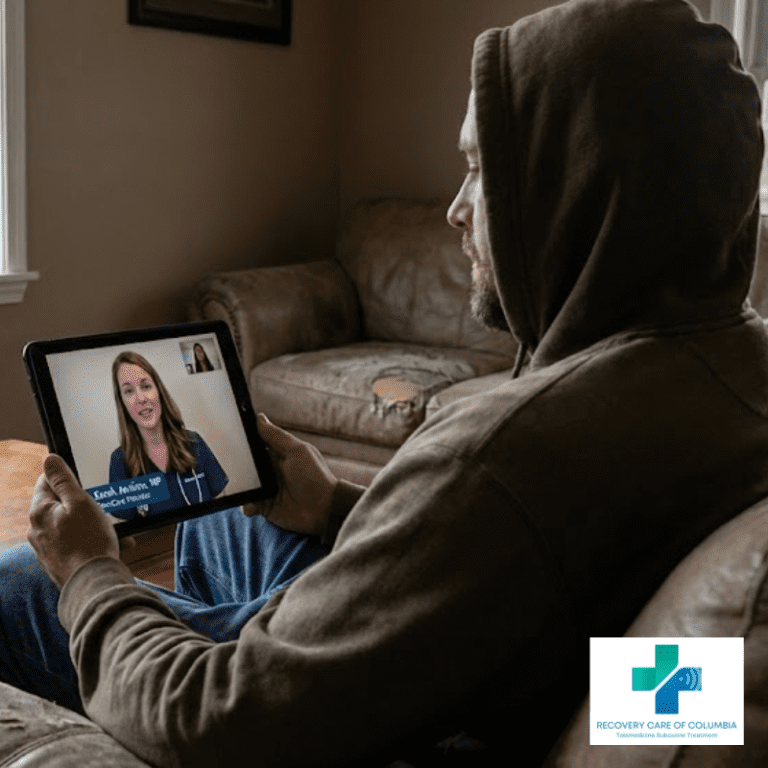
Recovery Care of Columbia provides 100% virtual addiction treatment across Tennessee, making help accessible even in rural or underserved areas.
Through telemedicine, patients can:
- Speak privately with licensed providers
- Discuss gabapentin and opioid use honestly
- Receive medically appropriate taper guidance
- Start same-day Suboxone treatment if opioids are involved
- Avoid travel, stigma, and long clinic waits
Treatment is confidential, judgment-free, and designed to meet patients where they are.
Why Patients Trust Recovery Care of Columbia
Recovery Care of Columbia has helped over 1,000 Tennesseans stabilize and begin recovery through compassionate, evidence-based care.
Key strengths include:
- Accredited by The Joint Commission
- Clinic owners in long-term recovery
- Over 100+ Google Reviews (from real patients)
- Recipient of Tennessee’s very first Virtual OBOT medical license
- Over 1000 patients served since 2021
- 2025 regional award winner for the “Best Substance Abuse Facility” by Best of Tennessee
- Same-day Suboxone prescriptions
- A kind and caring staff, some who are in recovery
- Overnight Suboxone delivery available in most areas (the pharmacy charges a delivery fee)
- A compassionate team of caring doctors, nurse practitioners, counselors, and administrators who genuinely care about your recovery.
- No clinic visits, ever. 100% online/virtual Suboxone treatment statewide
- Same-day appointments available every Monday through Friday from 8:00 AM to 5:00 PM (based on availability)
- Evening appointments available every Monday and Wednesday until 9:00 PM
- Compassionate, stigma-free, judgement-free care
- No referral needed
Our helpful staff is happy to answer any questions you may have. Call us or send us a text at (931) 548-3062, or message us securely using the Spruce Health mobile app.
Worried about starting online addiction treatment? Learn what to expect during your first Suboxone telemedicine appointment.
Patients juggling work, family, or transportation challenges can still get consistent support.
When to Seek Help for Gabapentin Withdrawal Symptoms
You should reach out for professional help if:
- Withdrawal symptoms interfere with daily life
- Anxiety, insomnia, or agitation worsen
- You’ve tried to stop before and couldn’t
- Gabapentin use overlaps with opioid addiction
You can learn more about costs on our insurance and pricing page, meet our supportive staff, or get started through:
Register for Online Addiction Treatment Now—Feel Better Tomorrow
- Register for virtual Suboxone treatment with TennCare Medicaid insurance
- Register for online Suboxone therapy using private health insurance
- Schedule a virtual Suboxone doctor appointment as a self-pay patient
- Returning patient? Click here to register
- Apply for our Sliding-Scale Program
- View all insurance plans we accept
- View our affordable self-pay program with biweekly and monthly payments
- We accept all TennCare Medicaid insurance plans, including Amerigroup Community Care, BlueCare, United Healthcare Community Plan, and Wellpoint Community Care
- We accept all major private insurance plans (from your employer or Healthcare.gov) including BCBS, Cigna, Ambetter, and United Healthcare.
Not sure if your insurance covers treatment? Click here to check your insurance coverage now.
Experience a safe transition from hydrocodone, oxycodone, OxyContin, heroin, fentanyl, methadone, morphine, Kratom, 7-OH (7-Hydroxy-opioids), Tramadol, Opana, codeine, oxymorphone, Percocet, and other opioids.
Call or text us at (931) 548-3062 to speak to someone about our telemedicine Suboxone program. You can also message us securely on the Spruce Health mobile app.
FAQs About Gabapentin Withdrawal Symptoms
Can gabapentin cause withdrawal even if it’s prescribed?
Yes. Physical dependence can occur even when taken exactly as prescribed.
Are gabapentin withdrawal symptoms dangerous?
They can be, especially seizures or severe confusion. Medical guidance is strongly recommended.
Does Suboxone help with gabapentin withdrawal?
Suboxone treats opioid withdrawal. Gabapentin requires its own taper strategy.
How long should a gabapentin taper take?
This varies by individual. A provider can tailor a safe plan.
Can telemedicine really help with withdrawal management?
Yes. Telemedicine allows consistent monitoring and support statewide.
Register Today – Get Seen Today – Receive a Suboxone Prescription Today
- TennCare Medicaid addiction treatment coverage
- Commercial insurance Suboxone program acceptance
- A payment plan for self-pay telemedicine Suboxone
- A sliding-scale program for eligible patients
Thanks to our unique virtual medical license, anyone living in East Tennessee, Middle Tennessee, or West Tennessee can safely and legally access online Suboxone treatment using any smartphone, tablet, or computer, without ever having to visit a clinic.
You can review insurance and pricing details before scheduling, so there are no surprises.
If you have TennCare Medicaid insurance, your treatment and medication costs are typically $0. If you have commercial health insurance, we will provide you with a treatment cost estimate before scheduling your first telemedicine appointment. If you don’t have health insurance, we offer biweekly and monthly payment plans.
Addiction-Related Articles
- Can Suboxone Stop Opioid Withdrawal? How Telemedicine Treatment Helps You Stabilize Faster
- Online Opioid Treatment: A Private, Affordable Path to Recovery From Home
- Kratom Withdrawal: Safe Treatment Options in Tennessee
- Suboxone Doctor Online: Tennessee’s Safer Path to Recovery
External Resources
- National Institute on Drug Abuse
- Substance Abuse and Mental Health Services Administration (SAMHSA)
- Kratom/7-OH/7-hydroxymitragynine addiction is another opioid addiction-related issue facing Tennessean’s, thanks to it being readily available and unregulated. Learn more about Kratom addiction and virtual treatment options in Tennessee.
- DEA.gov – Opioid Addiction Resources
- Centers for Disease Control and Prevention | CDC.gov
- National Center on Substance Abuse and Child Welfare