

Columbia Suboxone Clinic Blog
A Young Mom’s Kratom Story Sends Her to Life Support — a Warning for Tennessee
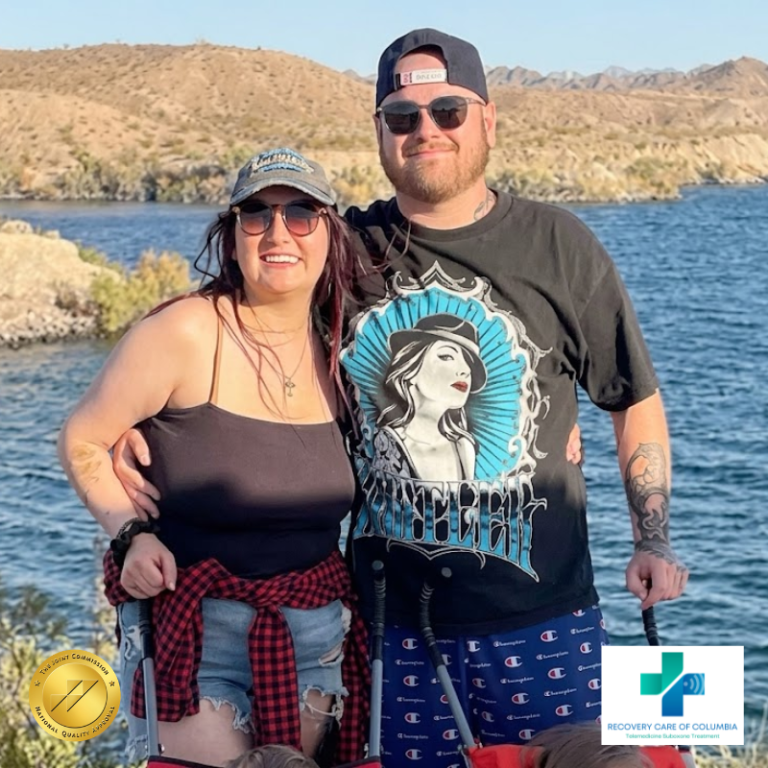
“You could just buy it at the gas station. It’s not going to hurt you.”
That’s what Mike Goodsell told his wife, Amanda, when she was dealing with persistent leg pain. It’s what millions of Americans have assumed about kratom — including plenty of Tennesseans, right up until our state banned it this month.
Amanda, a 27-year-old mother of twins from Kingman, Arizona, had never used kratom before. She picked up an over-the-counter gummy at a local gas station and took it for about a week. Then her husband woke up to find her unresponsive — her lips blue, unable to be woken.
According to her family’s account reported by Arizona’s Family and Gray News, Amanda went into cardiac arrest and was placed on life support, her heart barely pumping. Doctors initially told her husband she was in heart failure and might need a heart transplant. After two weeks in the hospital, her heart made what her husband describes as a miracle turnaround. She’s recovering at home — but she’ll need a defibrillator and heart medication for the rest of her life.
No one saw it coming. That’s the point of her story — and it’s exactly why Tennessee families need to hear it right now.
Tennessee’s First 100% Virtual Suboxone Treatment Program
Recovery Care of Columbia is Tennessee’s first licensed fully virtual OBOT (Office-Based Outpatient Treatment) provider — helping Tennesseans safely leave kratom, 7-OH, and other opioids behind through secure telemedicine. No clinic visits, ever.
- Treatment available anywhere in Tennessee
- Accredited by The Joint Commission
- Owned and operated by people in recovery in Middle Tennessee
Register online with your TennCare Medicaid or commercial insurance, or ask about our self-pay payment plans. Call or text us at (931) 548-3062.
Why “Natural” Never Meant “Safe”
Kratom comes from a tree native to Southeast Asia, and for years it has been marketed in the U.S. as a natural supplement for pain, energy, mood, anxiety, and even opioid withdrawal. That framing — herbal, natural, sold openly at gas stations and vape shops — is exactly what made the Goodsell family comfortable with it.
But here’s what the packaging never explained:
- Kratom’s active compounds — mitragynine and especially 7-hydroxymitragynine (7-OH) — act on the same opioid receptors as drugs like oxycodone and morphine.
- Modern products are a world away from traditional kratom leaf. Concentrated gummies, tablets, and liquid shots can deliver far more potent doses, and 7-OH is dramatically stronger than mitragynine.
- Potency is inconsistent from brand to brand and batch to batch, so users rarely know what dose they’re actually taking.
- In rare but documented cases, the FDA has linked kratom to cardiac arrest, seizures, and liver toxicity. Its opioid-like effects at higher doses have earned it the street name “gas station heroin.”
Amanda Goodsell took a legal product, as directed by nothing more than the label and good intentions, for seven days. Tennessee has its own name attached to this lesson.
Matthew Davenport’s Law: Why Kratom Is Now Illegal in Tennessee
In 2024, Matthew Davenport, a 27-year-old from Chattanooga — the same age as Amanda — died following a lethal interaction between kratom and his prescription medications. His story moved the Tennessee General Assembly to act.
HB1649/SB1656, known as Matthew Davenport’s Law, passed the House 78–9 and the Senate 23–3, was signed by Governor Bill Lee on May 7, 2026, and took effect July 1, 2026. Tennessee is now one of just eight states to fully ban kratom.
What the law means today:
- All forms of kratom are illegal in Tennessee — powders, capsules, teas, tinctures, extracts, gummies, shots, and concentrated 7-OH products
- Possession is a Class A misdemeanor (up to 11 months, 29 days and a $2,500 fine)
- Manufacturing, delivering, or selling is a felony, with harsher penalties for selling to minors
The shelves that stocked these products three weeks ago are now empty. But for regular users, empty shelves created a new problem.
What Happens When the Supply Disappears
If you or someone in your family was using kratom or 7-OH regularly before July 1, the past few weeks may have been rough — and there’s a physiological reason why.
Because these compounds act on opioid receptors, regular use creates real physical dependence. When the supply suddenly stops, withdrawal follows, often including:
- Restlessness, anxiety, and irritability
- Deep muscle and body aches
- Nausea, sweating, and chills
- Insomnia that lasts for days
- Powerful cravings that make relapse — or a dangerous substitute — feel tempting
Patients often describe kratom withdrawal as feeling like a severe flu combined with the inability to sleep or sit still. It’s miserable enough that some people turn to street opioids to make it stop — a trade that swaps a banned supplement for something far deadlier in the fentanyl era.
You don’t have to make that trade. Kratom and 7-OH withdrawal responds very well to medical treatment.
Frequently Asked Questions
Was what happened to Amanda Goodsell common?
Severe cardiac events from kratom are considered rare, and the FDA notes most kratom-associated deaths involved other substances as well. But her case highlights the core problem: with unregulated, high-potency products, there was no way for her family to judge the risk. “Rare” is little comfort when the product gives you no way to know if you’re the exception.
Is it illegal to still have kratom at home in Tennessee?
Yes. Since July 1, 2026, knowingly possessing kratom or 7-OH in any form is a Class A misdemeanor under Matthew Davenport’s Law. If you still have products at home, dispose of them — don’t sell or give them away, which carries felony penalties.
Can I be treated for kratom dependence even though kratom is now illegal?
Absolutely. Seeking treatment is legal, confidential, and protected. Our providers will never judge you for how your dependence started — many of our own team members are in recovery themselves.
How does Suboxone help with kratom or 7-OH withdrawal?
Suboxone® contains buprenorphine, which stabilizes the same opioid receptors that kratom and 7-OH were acting on. Taken under medical supervision, it relieves withdrawal symptoms and cravings so you can stop safely and stay stopped — without white-knuckling it or turning to something more dangerous.
Do I have to come to Columbia for appointments?
No — you never have to visit a clinic. Recovery Care of Columbia is 100% telemedicine. Every appointment happens by secure video from your home, anywhere in Tennessee, with medication delivery available for eligible patients.
A Safer Path Off Kratom and 7-OH
At Recovery Care of Columbia, we’ve helped Tennesseans transition safely off kratom and 7-OH, as well as hydrocodone, oxycodone, fentanyl, heroin, and other opioids.
Here’s what starting treatment looks like:
- Register online with TennCare, commercial insurance, or self-pay
- Meet your provider by video — a licensed Tennessee doctor or nurse practitioner
- Start medication the same day when appropriate, with prescriptions sent to your pharmacy or delivered
- Continue with ongoing support — follow-ups, counseling, and case management, all virtual
Why Choose Recovery Care of Columbia?
- Tennessee’s first licensed fully virtual OBOT provider
- Accredited by The Joint Commission
- Holds TennCare BeSMART and BMAT credentials
- Owned and operated by people in active recovery in Middle Tennessee
- Doctors, nurse practitioners, counselors, and case managers — many in recovery themselves
- All TennCare Medicaid plans accepted (Amerigroup, BlueCare, United Healthcare Community Plan, Wellpoint) — treatment typically $0 with TennCare
- Commercial insurance accepted, including BCBS, Cigna, and United Healthcare
- Same-day appointments available most weekdays
- Secure messaging through the Spruce Health mobile app
Start Kratom/7-OH Treatment Today — From Home
The kratom era in Tennessee is over. For some families, that’s a relief. For people left facing withdrawal, it can feel like a crisis. Either way, the next step is the same: a confidential conversation with a provider who understands exactly what you’re going through.
Call or text Recovery Care of Columbia at (931) 548-3062, message us securely on Spruce Health, or register online for an appointment this week.
Amanda Goodsell’s husband summed up his family’s ordeal in six words: give it up, it’s not worth it. If giving it up has been harder than you expected, that’s not a character flaw — it’s chemistry. And it’s treatable.
Related Articles
- Help for Kratom Addiction in Tennessee
- Kratom Addiction Help Near Me
- Kratom Rehab Near Me in Tennessee
- Kratom Addiction Treatment Centers: Virtual Recovery That Works
- How to Beat Kratom Addiction with Virtual Treatment
- How to Recover from Kratom Addiction in Tennessee
- Overcoming Kratom Addiction: Your Path to Lasting Recovery
- Kratom 7-OH Recovery: Virtual Suboxone Treatment
- Kratom Withdrawal Remedies: Safe Recovery in Tennessee
- Kratom Withdrawal Home Remedies and Safe Relief
- Kratom and 7-Hydroxy During Pregnancy: Hidden Dangers
- Suboxone Treats 7-OH and Kratom Withdrawal: A Safer Path
- Contact Recovery Care of Columbia
Source: Family account reported by Arizona’s Family (AZFamily) / Gray News, July 2026. Suboxone® is a registered trademark of Indivior UK Limited. This article is for informational purposes and is not medical or legal advice.